How do you write daycare daily reports for families who read in a language other than English?
Many centers serve families whose home language is not English. Here is how to keep daily reports understandable, respectful, and accurate without a translator on staff.
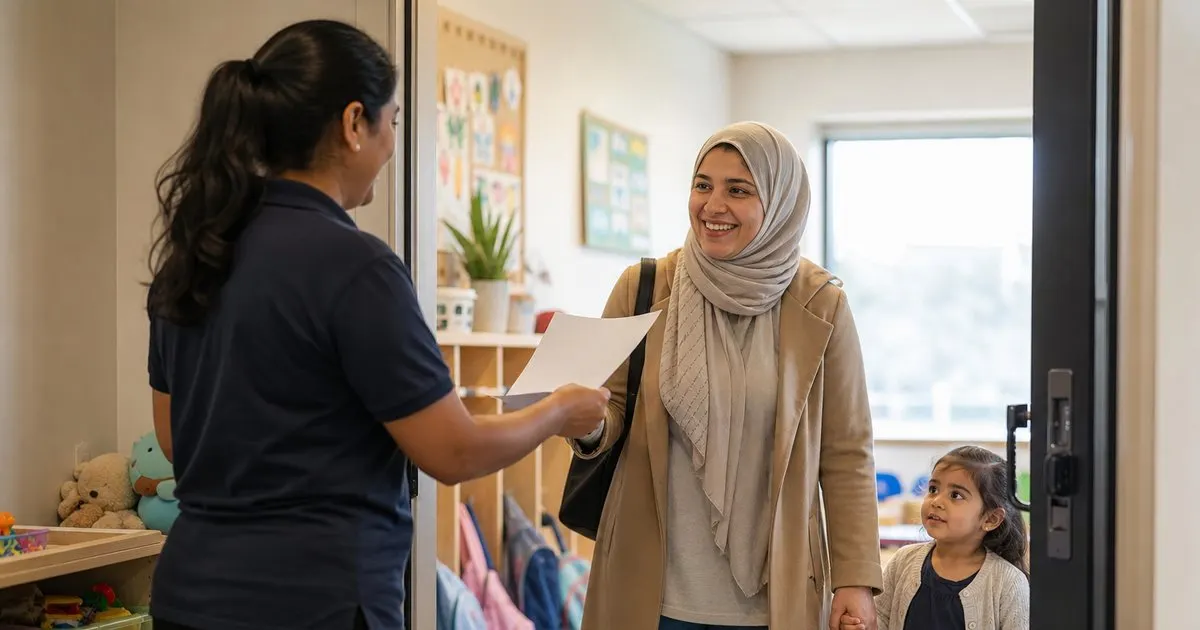
Start by finding out what each family actually needs
Do not assume anything from a surname, an accent, or a country of origin. Ask at enrollment, in a neutral way, which language the family prefers for written communication, whether someone in the household reads English comfortably, and whether they would rather receive short plain-English notes, notes in their home language, or both. Record the answer per guardian, not per classroom or per family, because two parents in the same household can have different preferences and both deserve to read about their child's day.
Preferences are more varied than most centers expect. Many parents read English well and speak it with less confidence, or the reverse. Some are comfortable with English for routine items like meals and naps but want their home language for anything about health, behavior, or a form they will sign. Some have limited literacy in any language and prefer a quick verbal summary at pickup. Set the preference once, note it where every teacher can see it, and revisit it at conferences, because it changes as families settle in.
Keep reading: How can daycare staff finish daily reports for parents without losing the whole afternoon?, What should a daycare include in a daily report to keep parents informed and reassured?, Can a daycare send daily reports to parents without making them install another app?. See how TinyReportr helps you daycare daily reports for parents.
Structure the report so it needs less translation
Structured fields cross languages almost for free. Times, checkboxes, quantity words for meals, and simple icons for naps, diapers, and outdoor time can be read by a parent with very little English and need no translation at all. Push as much of the report as possible into that structure. Then keep the free-text narrative short and plain: short sentences, common words, no idioms, no classroom jargon. Circle time means nothing to many families; group story time on the rug says the same thing to everyone. Related: What should a daycare include in a daily report to keep parents informed and reassured?
A consistent template does quiet teaching. A parent who is learning English sees the same layout every day, learns where the nap line lives and what the meal words mean, and reads the report faster each week. Photos with a one-line caption communicate more than a paragraph and are welcomed by every family regardless of language. Avoid jokes, sarcasm, and cultural references in the narrative. They rarely survive translation, and a lighthearted line about a picky eater can land as criticism when read through a translation tool. Related: How can a preschool share daily photos with parents while keeping every child's privacy safe?
Use translation carefully and honestly
Automated translation is good enough for routine narrative in many common language pairs and unreliable for anything sensitive. A reasonable policy is to allow automated translation for daily routine notes, and to route anything about injuries, behavior concerns, developmental observations, medication, or policy changes through a human translator or an in-person conversation with an interpreter. Tell families when a translation is automated so they know to ask if a sentence reads strangely. That transparency builds more trust than a polished translation the family cannot verify.
Bilingual staff are an asset, not a free translation department. A teacher who speaks Spanish should not be expected to translate every note for every Spanish-speaking family on top of running a classroom. Some centers build a short glossary of the phrases that appear most often in their reports, have a native speaker review it once, and reuse it. For families with limited literacy, a two-minute verbal summary at pickup, planned rather than improvised, is often the most respectful option, and the written report becomes the backup rather than the main channel. Related: How can daycare staff finish daily reports for parents without losing the whole afternoon?
Get the important things right beyond the daily note
Consent forms, medication authorizations, incident reports, and the parent handbook are where translation errors have real consequences. A daily report in a family's language builds goodwill; a signed form the family could not read is a liability for the center and a risk for the child. Programs that receive certain public funding may have specific language access obligations, and requirements vary by program and state, so ask your licensor or funding agency what applies to you. When in doubt, use a qualified interpreter for anything a family will sign. Related: Can a daycare send daily reports to parents without making them install another app?
A workable checklist looks like this: preferred language recorded per guardian, a structured report template, plain-English narrative, human review for sensitive items, and an interpreter for enrollment, conferences, and incidents. TinyReportr can store a language preference per guardian and keeps the structured parts of the report readable without translation, which covers the everyday need. No software replaces a conversation when the topic matters, and the families who most need that conversation are often the ones least likely to ask for it.
- Ask each guardian which language they want for written notes and record it where every teacher can see it.
- Move meals, naps, diapers, and times into structured fields and icons that need no translation.
- Keep the narrative short and plain, and reserve human translation or an interpreter for injuries, behavior, and forms.
- Bilingual staff should not carry the center's translation load on top of their classroom duties.

Julien Jimenez
Julien Jimenez is an independent software builder based in Paris. He designs, ships, and operates focused SaaS products for small businesses and independent professionals. Read the full author page.
Daily reports parents actually read
Daycare daily reports for parents. TinyReportr is built to help you put this into practice.
Start daily reportsMore from the TinyReportr blog

Get the TinyReportr playbook
Practical guides on childcare operations, straight to your inbox as we publish them. No spam, unsubscribe any time.