What is the best way to track potty training progress in a toddler daily report?
Toilet learning works when home and daycare are consistent, and the daily report is where that consistency gets built. Here is how to log it so it actually helps.
Agree on the plan before you start logging
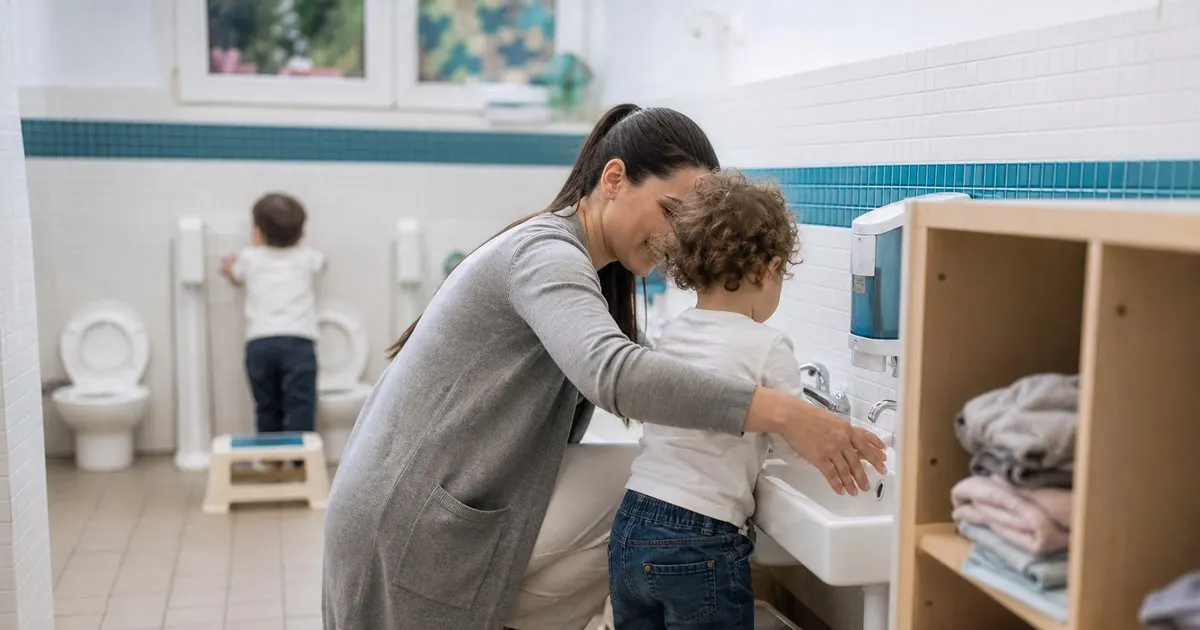
Toilet learning at a center only works when home and classroom use the same approach, the same words, and roughly the same timeline. Before anyone logs anything, hold a short conversation or fill in a brief written plan: the words the family uses, whether the child will be in underwear, training pants, or diapers at the center, the sitting schedule such as after meals and before nap, how accidents are handled, and what readiness signs the center looks for. Many centers use a readiness checklist and most will not push a child who is clearly not ready.
Put the plan in the child's file and reference it in the report for the first few weeks so every teacher in the room follows the same script. Families sometimes want to start before the child shows readiness, often because of a preschool deadline, and the daily log becomes neutral evidence in either direction. Remember that hygiene and documentation rules still apply. Some states require training pant and underwear changes to be logged the same way diaper changes are, and handwashing procedures do not change because the child is now sitting on a toilet. Related: What is the best way for staff to log a daily report on one shared classroom tablet?
Keep reading: How can daycare staff finish daily reports for parents without losing the whole afternoon?, What should a daycare include in a daily report to keep parents informed and reassured?, Can a daycare send daily reports to parents without making them install another app?. See how TinyReportr helps you daycare daily reports for parents.
Log attempts, successes, and accidents as separate events
Three event types cover almost everything: sat on the toilet with no result, sat and went, and an accident, with a note on whether the child noticed or told someone. Log a time for every one of them. A summary like three successes and two accidents tells a parent much less than the timing. Successes at 9:10, 11:30, and 2:45 reveal a rhythm the family can copy at home. An accident at 3:50, right after nap, suggests adding a post-nap sit. The pattern is the useful part, and a count erases it. Related: Can a daycare send daily reports to parents without making them install another app?
Record whether each sit was prompted by a teacher or initiated by the child. The shift from prompted to self-initiated is the real milestone in toilet learning, and parents cannot see it happening without a log that captures it. For children in training pants, note dry checks too: dry at the 10:00 check is genuinely encouraging information. Keep every entry neutral. Accident at 1:15, noticed afterward, changed into fresh pants reads as a record. Anything that sounds like scolding does not belong, because the report should never read like a scorecard for a two-year-old. Related: How can daycare staff finish daily reports for parents without losing the whole afternoon?
What to write in the narrative, and what to leave out
The narrative is for the observations a checkbox cannot hold. The child told a teacher they needed to go for the first time. The child resisted sitting and got upset. The child hid behind the shelf to have a bowel movement, which is a common sign of both readiness and of withholding. The child asked for privacy or wanted the door closed. These are the details that let a family adjust the plan, and each one takes a sentence. Write them the day they happen, because they are easy to forget by the following week.
Leave out judgment and comparison. Most of the room is trained by now is not helpful and will be remembered by the parent for a long time. Stool consistency is worth a brief plain note when it is clearly unusual, because constipation is a frequent cause of setbacks and the pediatrician will ask, but keep it to a few words. The report is also the right place for logistics: how many clothing changes happened today and a request for more pants and socks, so the cubby does not run empty on a hard day. Related: What should a daycare include in a daily report to keep parents informed and reassured?
Use the log to decide when to change the plan, not just to report
After a week or two, look at the pattern with the family. Are successes clustering at predictable times? Are accidents happening during transitions or busy outdoor play? Is the child waking dry from nap? Those answers drive the next step: fewer prompts, a move from training pants to underwear, a new sit before outdoor time, or a pause. Digital reports make this easy because a week of entries fits on one screen. On paper, ask the lead to write a short weekly summary so the conversation is based on data rather than impressions.
Setbacks are normal and usually have a cause: a new sibling, an illness, a move, a classroom transition. The log makes a setback visible early and less alarming, because everyone can see the accident rate rise, name the likely reason, and agree to ease off for a while without anyone feeling they failed. TinyReportr records toileting entries with a time, a type, and a prompted or self-initiated flag, and shows the week at a glance, which is the view we would bring to that conversation. The tool matters less than the habit of logging each event as it happens.
- Agree on words, clothing, and a sitting schedule with the family before the first entry is logged.
- Log every sit, success, and accident as a timed event, and note whether it was prompted or self-initiated.
- Keep narrative notes short, specific, and free of judgment or comparison to other children.
- Review the week's pattern with the family every week or two and adjust the plan from the data.

Julien Jimenez
Julien Jimenez is an independent software builder based in Paris. He designs, ships, and operates focused SaaS products for small businesses and independent professionals. Read the full author page.
Daily reports parents actually read
Daycare daily reports for parents. TinyReportr is built to help you put this into practice.
Start daily reportsMore from the TinyReportr blog


Get the TinyReportr playbook
Practical guides on childcare operations, straight to your inbox as we publish them. No spam, unsubscribe any time.